
Introduction:
In the wake of a global economic upheaval and a relentless push for excellence, organizations find themselves at a crossroads. The imperative? To deliver top-notch products at competitive prices while cultivating customer satisfaction and fueling profitability. Enter Total Quality Management (TQM), the compass guiding businesses toward a prosperous horizon.
1. Embarking on the TQM Odyssey:
• A Call for Quality: Unveil the compelling forces compelling organizations to embrace TQM.
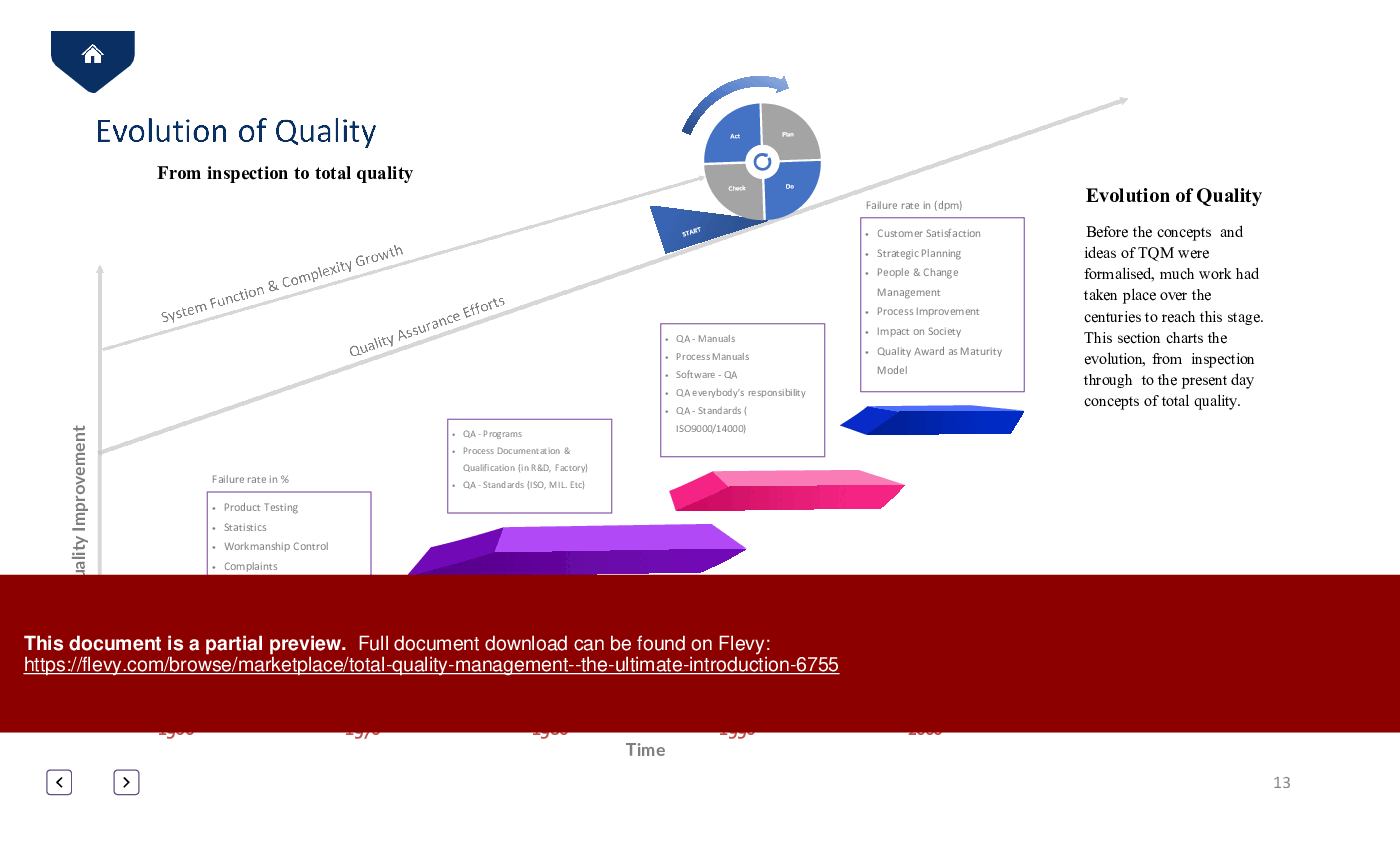
• Evolution of Excellence: Traverse through the historical evolution of quality standards.
• Quality Deconstructed: Define the multifaceted essence of quality.
• Dimensions of Distinction: Explore the realms of manufacturing and service quality.
• TQM's Genesis: Lay the foundational concepts of TQM and its mission of relentless improvement.
2. The TQM Blueprint:
• Defining TQM: Clarify the essence of Total Quality Management and its overarching objectives.
• The Framework of Excellence: Embrace the structured TQM Framework.
• Strategic Quality Management: Delve into the strategic elements underpinning TQM's success.
• Gurus of Quality: Pay homage to the visionaries who shaped the TQM landscape.
3. Navigating the TQM Landscape: A Holistic Introduction:
• TQM Journey Begins: Set the stage for a transformative exploration of TQM.
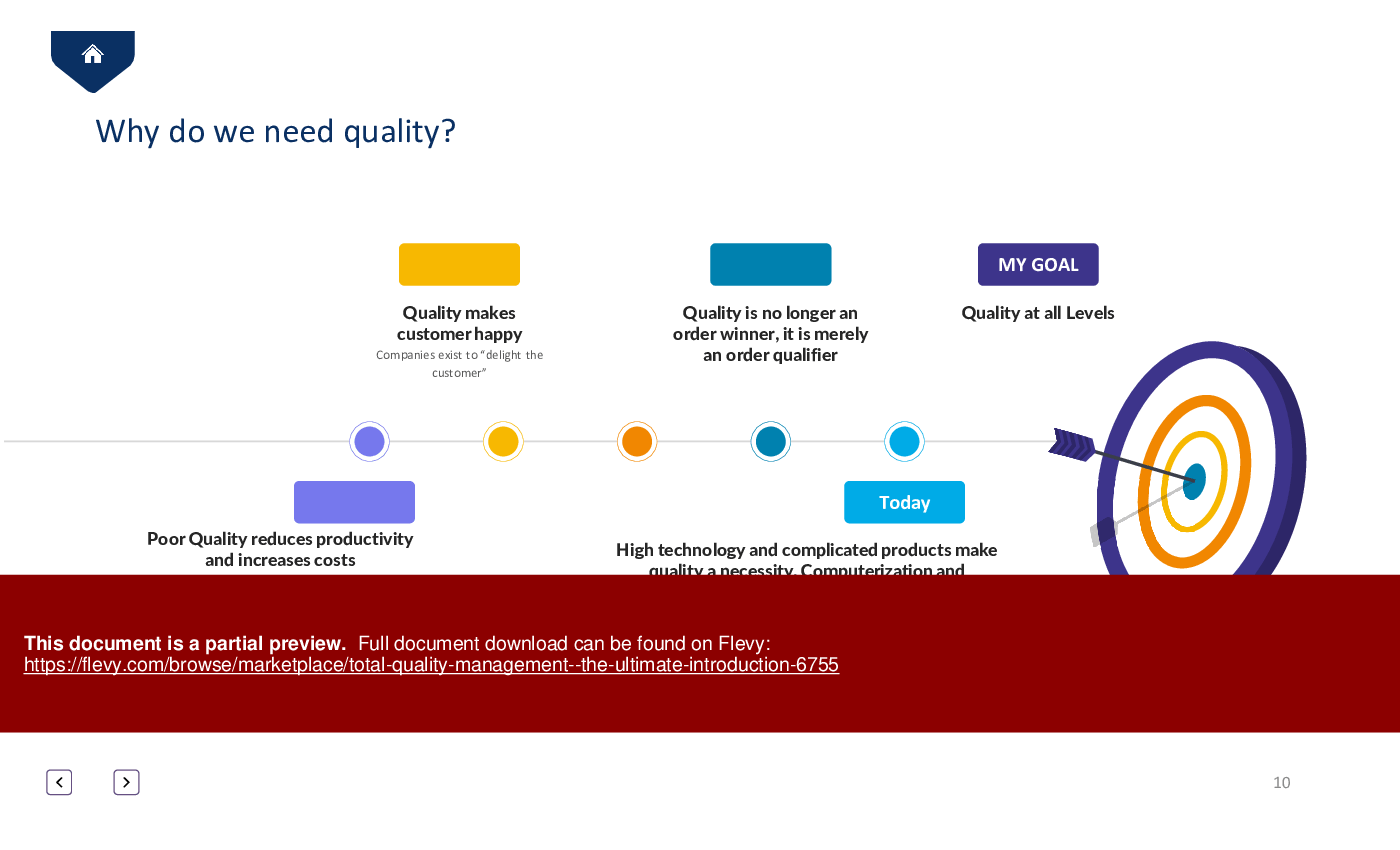
• Need for Quality: Uncover why quality is the cornerstone of organizational triumph.
4. TQM's Unstoppable Force:
• TQM Unveiled: Demystify the essence of TQM as a dynamic approach to business.
• TQM in Action: Observe how TQM molds organizations into consistent, customer-centric achievers.
• The Pursuit of Excellence: Understand TQM as an ongoing journey towards the pinnacle of excellence.
This 56-slide PowerPoint presentation serves as an illuminating introduction to Total Quality Management (TQM). It's fully customizable and enriched with engaging diagrams, ice-breakers, images, and other visuals to provide a comprehensive understanding of the key concepts that underpin the world of quality systems and organizational excellence.
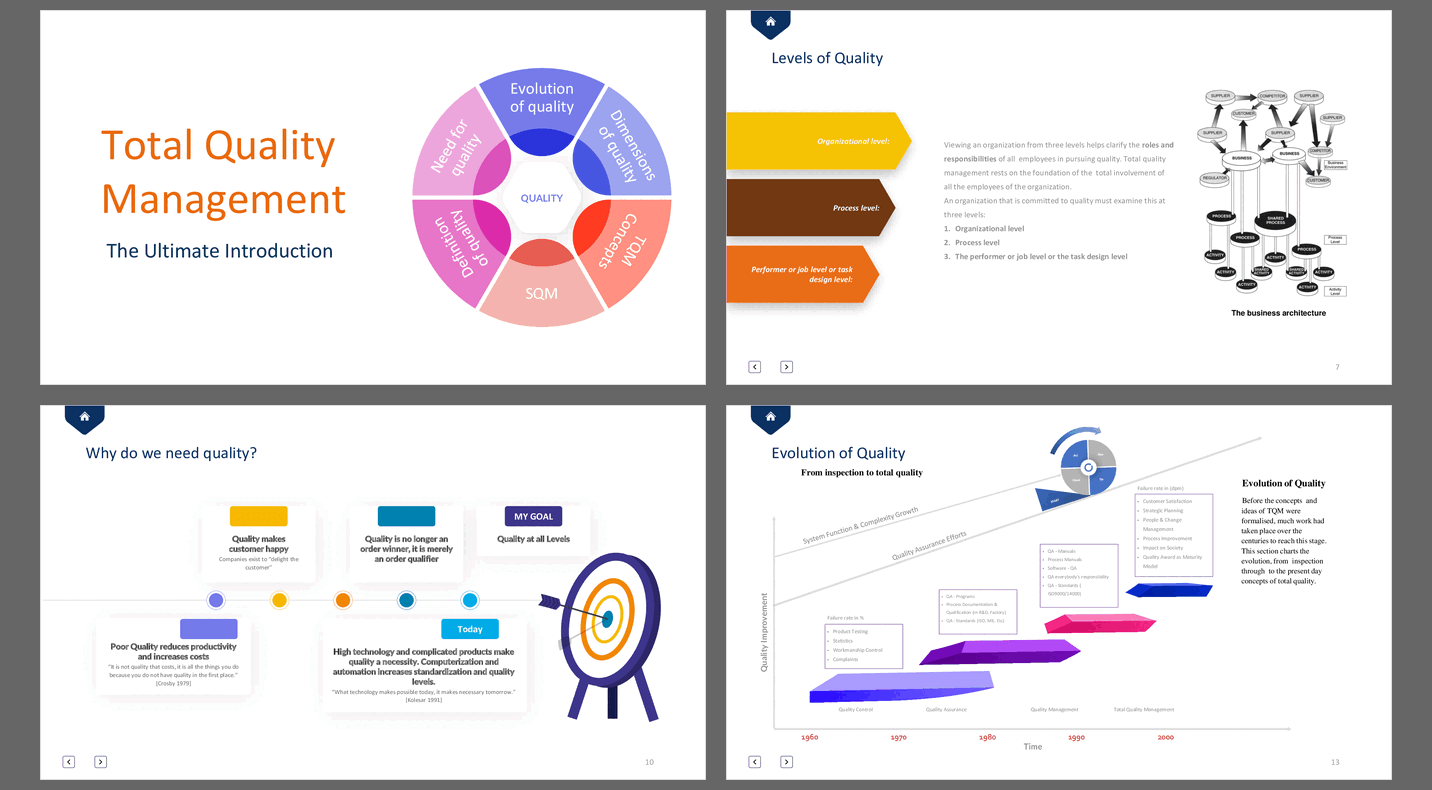
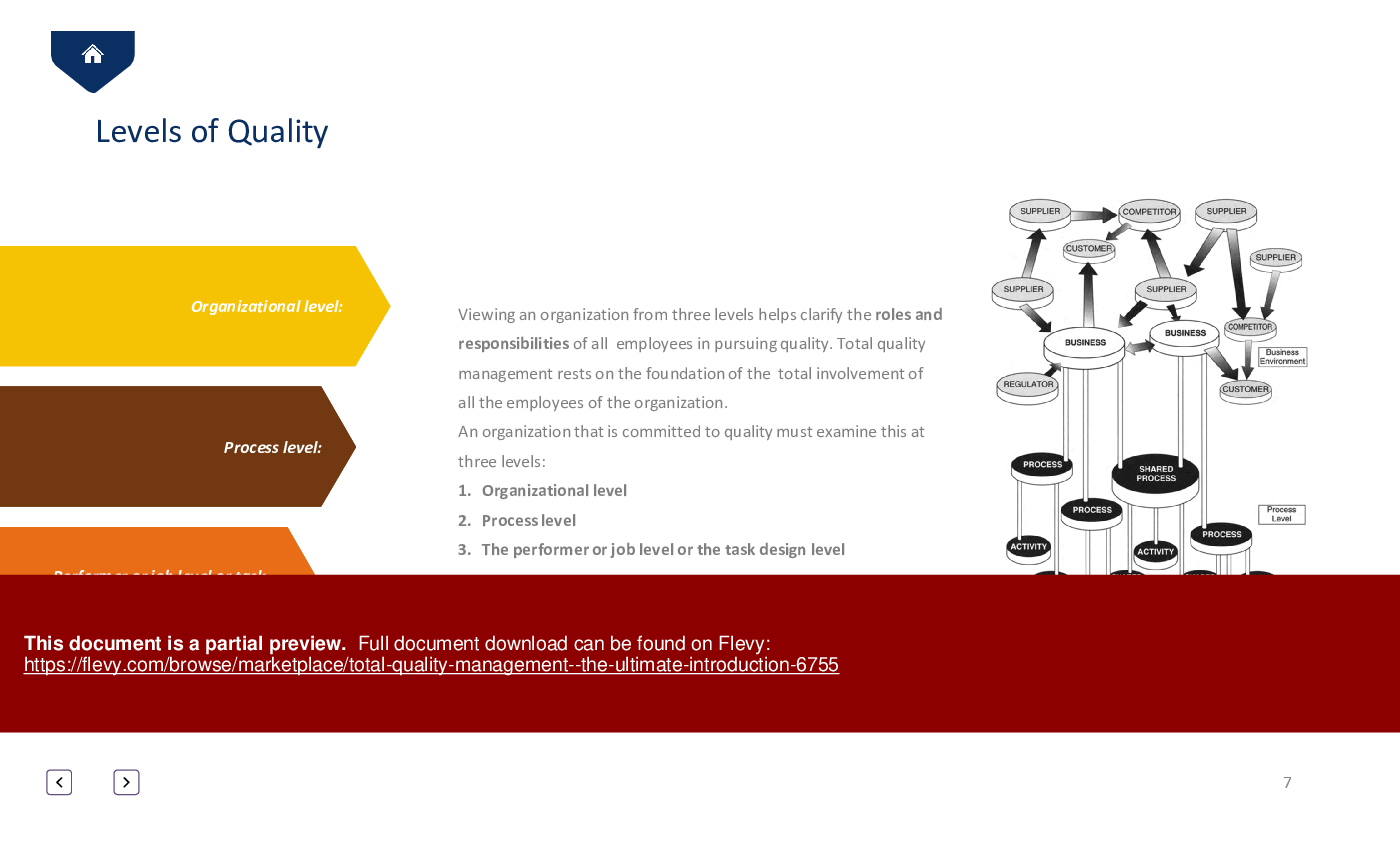
Gain insights into the levels of quality and the roles and responsibilities of employees. Understand the importance of precision versus accuracy in quality measurements.
Got a question about the product? Email us at support@flevy.com or ask the author directly by using the "Ask the Author a Question" form. If you cannot view the preview above this document description, go here to view the large preview instead.
Executive Summary
This PowerPoint presentation, titled "Total Quality Management - The Ultimate Introduction," serves as a comprehensive guide to understanding Total Quality Management (TQM) principles and practices. Developed by a team of experts with extensive consulting backgrounds at McKinsey, Deloitte, and Capgemini, this deck equips corporate executives, integration leaders, and consultants with the foundational knowledge necessary to implement TQM effectively. By exploring the evolution of quality, the dimensions of manufacturing and service quality, and the roles of key quality gurus, users will gain insights into enhancing organizational performance through quality management.
Who This Is For and When to Use
• Corporate executives seeking to implement TQM in their organizations
• Integration leaders responsible for quality assurance and continuous improvement
• Consultants advising clients on quality management frameworks
• Quality assurance teams aiming to enhance operational efficiency
• Training and development managers focused on employee engagement in quality initiatives
Best-fit moments to use this deck:
• During TQM training sessions for new employees
• In strategic planning meetings focused on quality improvement
• When assessing current quality management practices and identifying gaps
• For workshops aimed at fostering a culture of quality within the organization
Learning Objectives
• Define Total Quality Management and its significance in modern organizations
• Identify the roles of key figures in the evolution of quality management
• Analyze the dimensions of quality in manufacturing and service contexts
• Establish a framework for implementing TQM principles across departments
• Develop strategies for continuous improvement in quality management
• Assess the impact of quality on customer satisfaction and business success
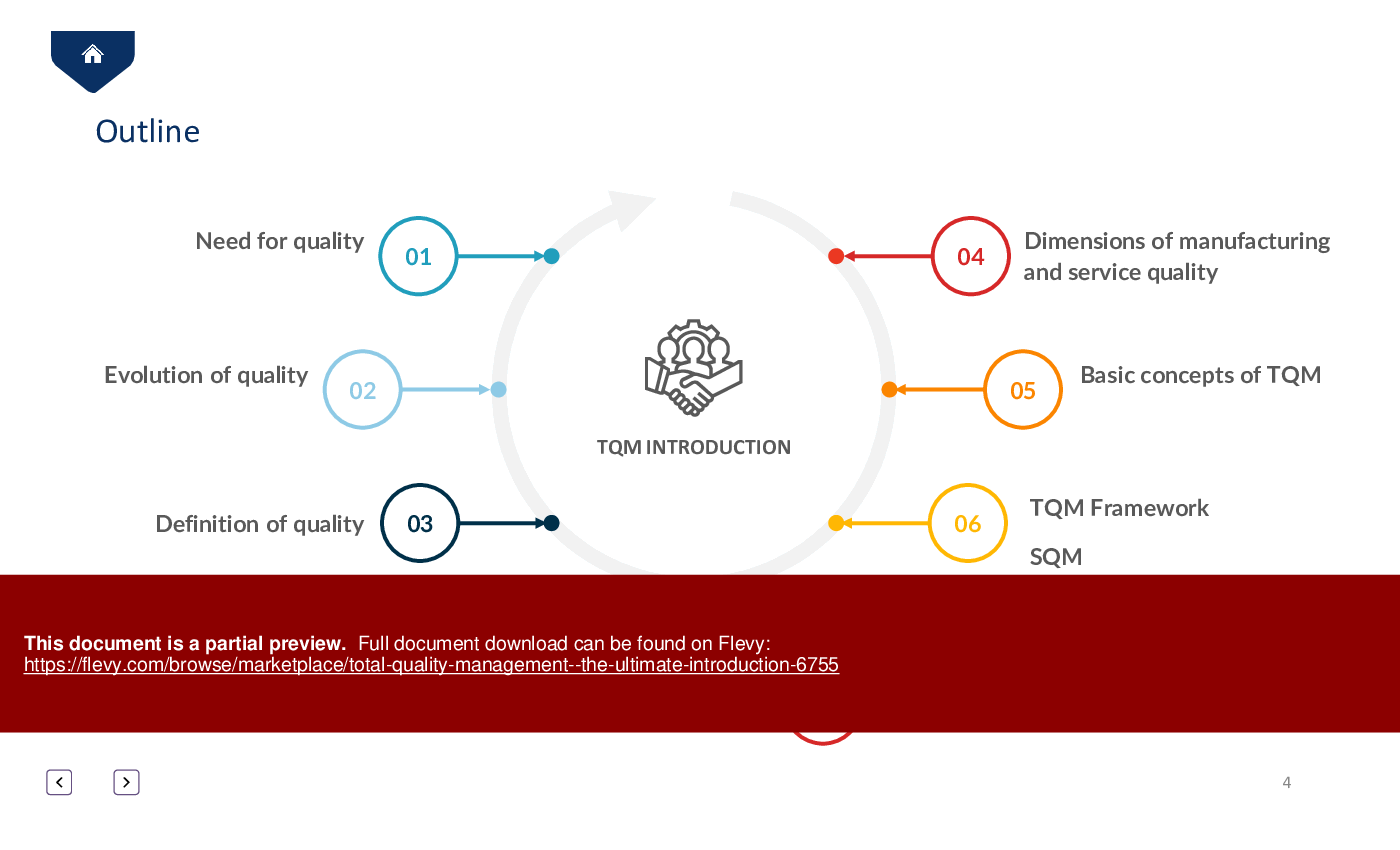
Table of Contents
• Need for Quality (page 10)
• Evolution of Quality (page 13)
• Definition of Quality (page 14)
• Dimensions of Manufacturing and Service Quality (page 23)
• Basic Concepts of TQM (page 36)
• TQM Framework (page 39)
• Quality Gurus (page 42)
Primary Topics Covered
• Need for Quality - Quality is essential for organizational survival and growth in a competitive market, as it directly impacts customer satisfaction and profitability.
• Evolution of Quality - Traces the historical development of quality management from inspection to Total Quality Management, highlighting key milestones and methodologies.
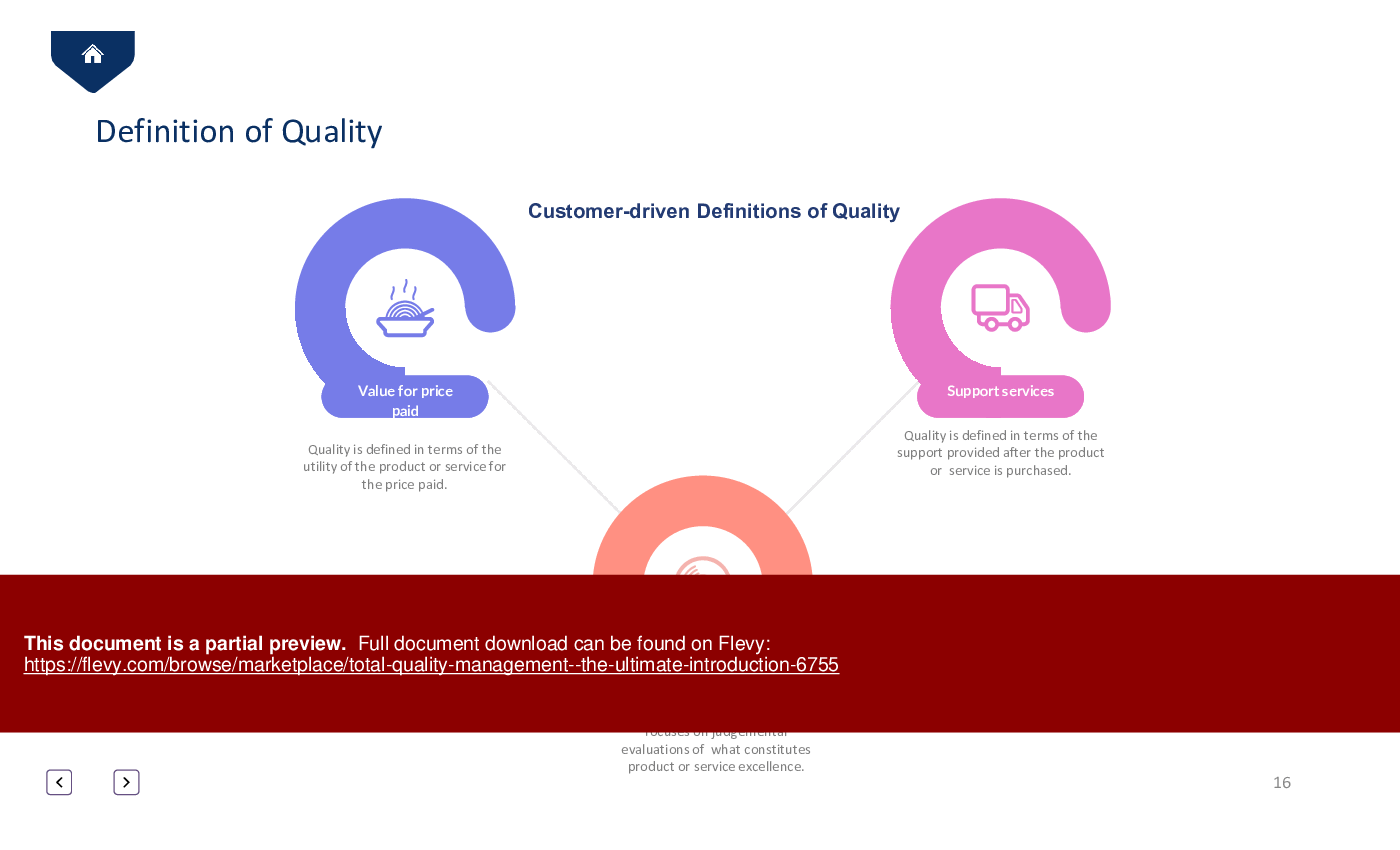
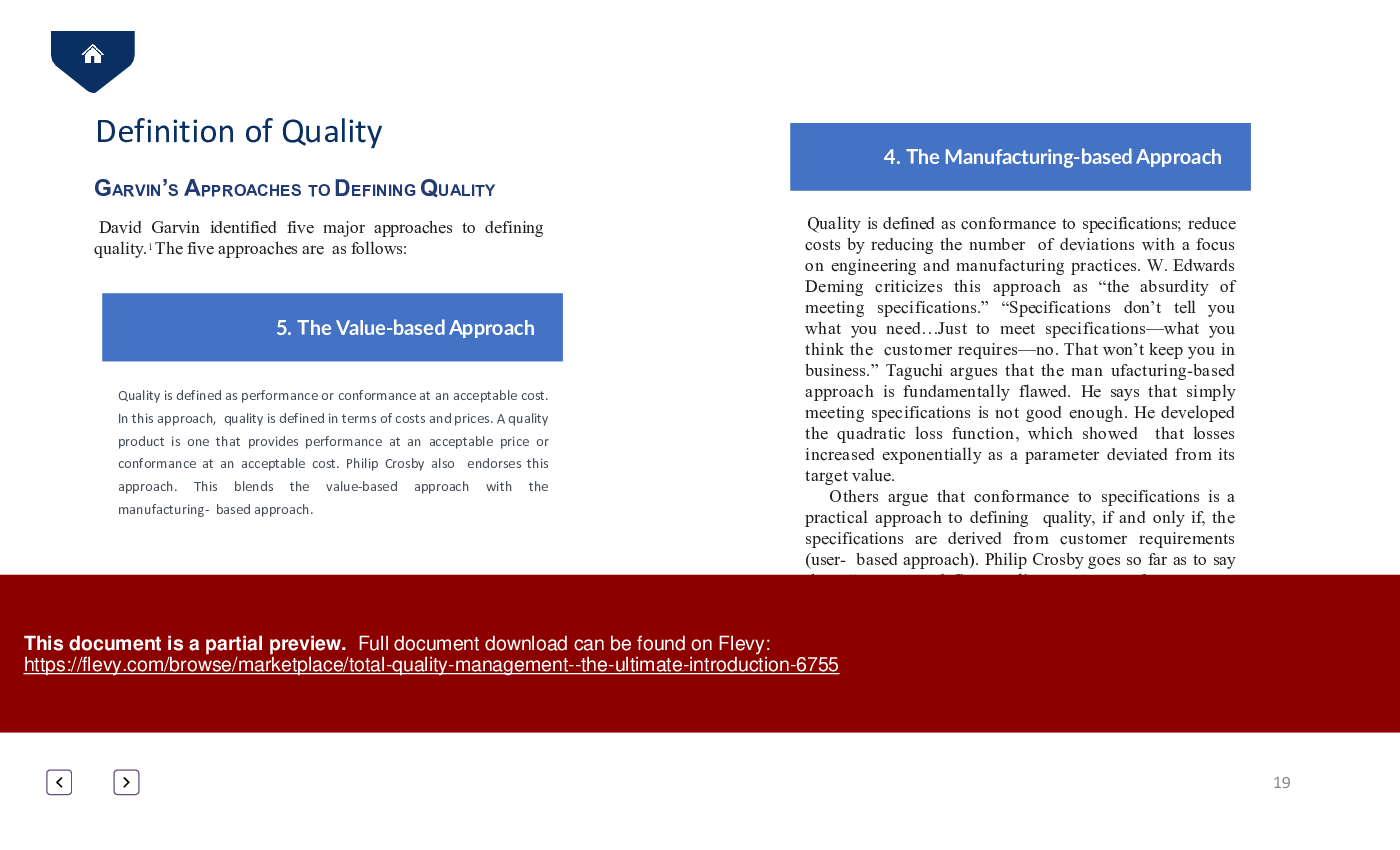
• Definition of Quality - Explores various definitions of quality, emphasizing its subjective nature and the importance of meeting customer expectations.
• Dimensions of Quality - Discusses the multidimensional aspects of quality, including performance, reliability, and customer perception, relevant to both products and services.
• Basic Concepts of TQM - Introduces the core principles of TQM, including employee involvement, customer focus, and continuous improvement, essential for effective implementation.
• TQM Framework - Outlines the systematic approach to TQM, integrating tools, techniques, and performance measures to enhance quality across the organization.
Deliverables, Templates, and Tools
• TQM implementation roadmap template to guide organizations through the adoption process
• Quality assessment checklist for evaluating current practices and identifying improvement areas
• Employee training materials on TQM principles and practices
• Performance measurement framework to track quality improvements over time
• Case studies showcasing successful TQM implementations in various industries
Slide Highlights
• Overview of the evolution of quality management, illustrating key milestones and methodologies
• Definition of quality with multiple perspectives from industry leaders and organizations
• Visual representation of the dimensions of quality, emphasizing their importance in product and service delivery
• Framework for TQM implementation, detailing the roles of management and employees in fostering a quality culture
• Profiles of influential quality gurus and their contributions to the field of quality management
Potential Workshop Agenda
Introduction to TQM (30 minutes)
• Overview of TQM principles and importance
• Discussion on the need for quality in organizations
Understanding Quality Dimensions (45 minutes)
• Explore the dimensions of quality in products and services
• Group activity to assess quality in current organizational practices
Implementing TQM Framework (60 minutes)
• Outline the steps for TQM implementation
• Identify roles and responsibilities for effective quality management
Continuous Improvement Strategies (45 minutes)
• Discuss methods for fostering a culture of continuous improvement
• Develop action plans for quality enhancement initiatives
Customization Guidance
• Tailor the TQM framework to align with specific organizational goals and industry standards
• Modify training materials to reflect company-specific terminology and processes
• Adjust performance metrics to fit the unique operational context of the organization
Secondary Topics Covered
• Approaches to Quality Management
• Factors influencing quality management decisions
• The role of technology in enhancing quality
• The impact of socio-cultural factors on quality practices
FAQ
What is Total Quality Management?
Total Quality Management (TQM) is a management approach centered on quality, involving all members of an organization to achieve long-term success through customer satisfaction.
Why is quality important in business?
Quality is crucial for organizational survival and growth, as it directly influences customer satisfaction, profitability, and brand reputation.
Who are the key figures in quality management?
Key figures include W. Edwards Deming, Joseph Juran, Philip Crosby, and Kaoru Ishikawa, each contributing significantly to the evolution of quality management practices.
What are the dimensions of quality?
Dimensions of quality include performance, reliability, conformance, durability, serviceability, aesthetics, and perceived quality, applicable to both products and services.
How can organizations implement TQM effectively?
Organizations can implement TQM by fostering a culture of quality, involving all employees, focusing on customer needs, and continuously improving processes.
What tools are used in TQM?
Common tools include statistical process control, quality function deployment, and root cause analysis, which help organizations monitor and improve quality.
How does TQM impact customer satisfaction?
TQM enhances customer satisfaction by ensuring that products and services consistently meet or exceed customer expectations through continuous improvement.
What is the role of management in TQM?
Management plays a critical role in setting the vision for quality, providing resources, and fostering a culture that prioritizes quality across the organization.
Glossary
• Total Quality Management (TQM) - A management approach focused on quality, involving all members of an organization.
• Quality Control - The process of ensuring that products meet specified quality standards.
• Quality Assurance - The systematic process of ensuring quality in products and services through planned activities.
• Continuous Improvement - Ongoing efforts to enhance products, services, or processes.
• Performance Measures - Metrics used to assess the quality and effectiveness of processes and products.
• Statistical Process Control (SPC) - A method of quality control using statistical methods to monitor and control processes.
• Customer Satisfaction - A measure of how products and services meet or exceed customer expectations.
• Quality Gurus - Influential figures in the field of quality management, including Deming, Juran, and Crosby.
• Kaizen - A Japanese term meaning "continuous improvement," often used in quality management contexts.
• ISO 9001 - An international standard for quality management systems.
• Quality Function Deployment (QFD) - A method for translating customer requirements into technical specifications.
• Root Cause Analysis - A problem-solving method used to identify the underlying causes of issues.
• Benchmarking - The practice of comparing business processes and performance metrics to industry bests.
• Supplier Partnership - Collaborating with suppliers to enhance quality and efficiency in the supply chain.
• Employee Involvement - Engaging employees at all levels in the quality management process.
• Customer Focus - Prioritizing customer needs and satisfaction in all organizational activities.
• Process Management - The practice of overseeing and improving organizational processes to enhance quality.
• Quality Improvement - Efforts aimed at enhancing the quality of products, services, and processes.
• Defect Prevention - Strategies aimed at eliminating defects before they occur in products or services.
• Quality Cost - The total cost of ensuring quality, including prevention, appraisal, and failure costs.
• Lean Management - A methodology focused on minimizing waste while maximizing productivity.
• Six Sigma - A data-driven approach to eliminating defects and improving quality in processes.
Source: Best Practices in TQM PowerPoint Slides: Total Quality Management - The Ultimate Introduction PowerPoint (PPTX) Presentation Slide Deck, RadVector Consulting
This document is available as part of the following discounted bundle(s):

Save %!
Total Quality Management
This bundle contains 14 total documents. See all the documents to the right.
|
Receive our FREE presentation on Operational Excellence
This 50-slide presentation provides a high-level introduction to the 4 Building Blocks of Operational Excellence. Achieving OpEx requires the implementation of a Business Execution System that integrates these 4 building blocks. |